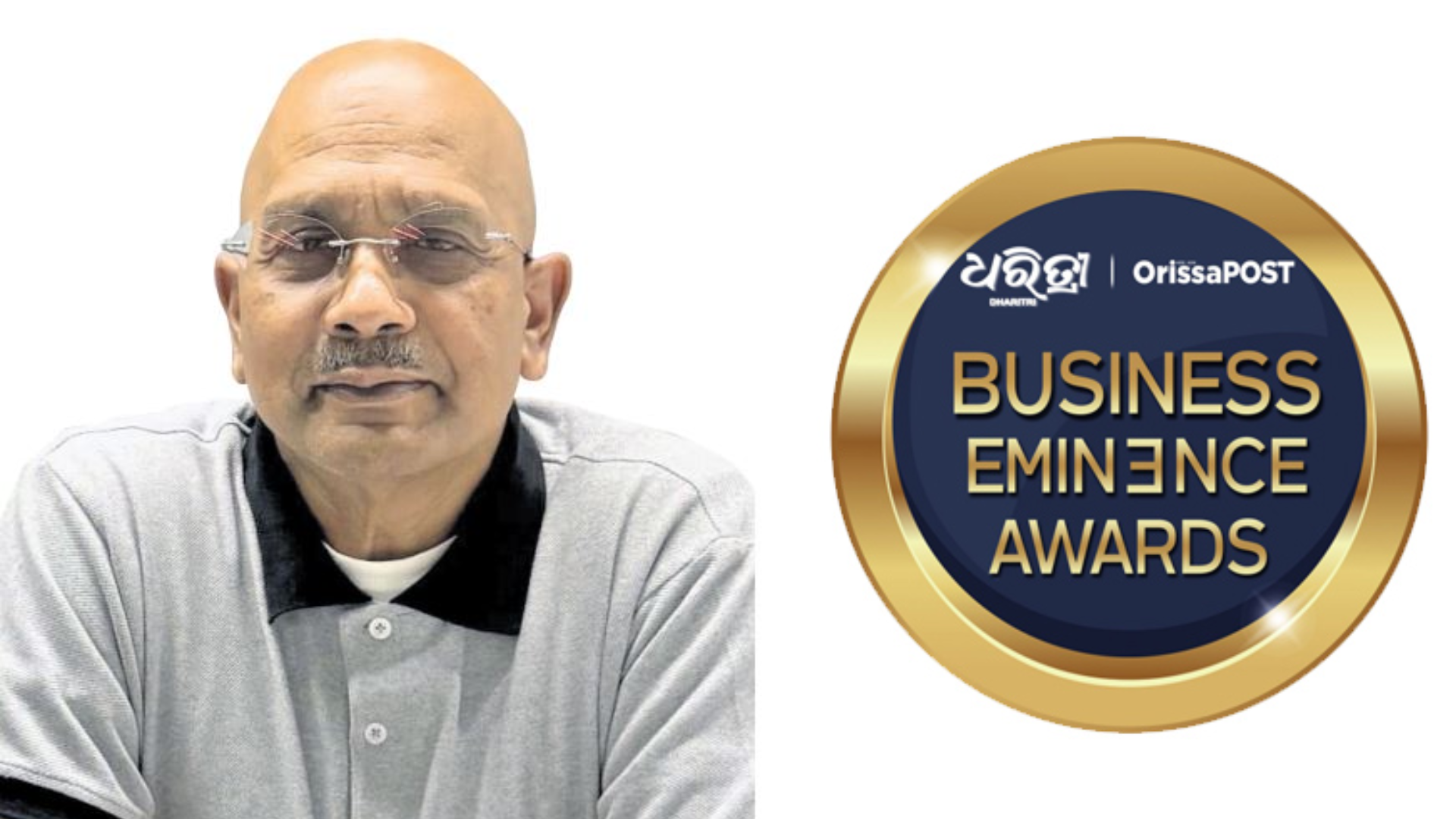
Somdutt Behura, co-founder of KT Global School, is a visionary educationist, philanthropist, and data management strategist with over 30 years of experience in the educational landscape. Under his stewardship, the institution has grown into a premier residential-cum-day boarding school in Bhubaneswar. Behura has been instrumental in shaping the school’s 16-acre campus, which includes state-of-the-art facilities like the Design Thinking Lab, Sports and Arts Academies. His leadership focuses on holistic development, ensuring students excel in both academics and co-curricular fields such as sports and performing arts, while continuing to drive the school’s mission of fostering global citizenship with a strong sense of social responsibility.
Being a major player in the education industry, what do you think are the challenges that the education sector is facing in the country?
India’s education system is built for a past reality, creating a gap between learning and real-world application. It prioritises marks over mastery, rewarding memory and speed instead of curiosity and deep understanding. Classrooms follow a passive model where students rarely question or think independently. Teachers often lack training, resources, and flexibility to encourage inquiry-based learning. At the same time, societal pressure discourages risk-taking, pushing students to focus on grades due to fear of failure, parental expectations, and comparisons. As a result, even top-performing students may struggle to apply knowledge effectively beyond the classroom.
The digital revolution is here. What implications will artificial intelligence have in the education sector?
The internet reshaped access to information, but AI is redefining what it means to learn. At its core lies natural intelligence—the human ability to think, reason, and evolve—responsible for most human progress. However, AI risks amplifying existing imbalances by empowering a small group of creators while turning the majority into passive consumers, reducing independent thinking. Education must respond urgently. By integrating First Principles thinking early on, students can develop inquiry and problem-solving skills that counter this trend. Otherwise, growing dependence on AI may lead to a cognitive “blowback,” where our reliance reshapes human thinking and behavior—potentially redefining our needs and even our existence.
The Indian education system has often been criticized for its emphasis on rote memorization and test scores, rather than fostering a culture of critical thinking, creativity, and practical skills. What measures should be taken to prepare the students accordingly?
The traditional education system prioritises rote learning and test scores over true understanding. To improve it, we must shift from overloaded curricula to deeper learning and encourage questioning rather than memorizing answers. Schools should adopt experiential learning, allowing students to learn by doing and applying concepts in real life. Evaluation must assess depth of thinking instead of just outcomes. Students also need guidance to use AI responsibly without overdependence. Finally, the learning culture should become more flexible, embracing failure as an essential part of growth and innovation.
How has your journey been so far? What makes KT Global School a preferable place for students?
Change is gradual and challenging, but deeply purposeful. With the vision of “Transforming Minds,” KT Global School aims to redefine traditional education. The journey requires retraining teachers, reshaping parent expectations, and redesigning curricula, while constantly innovating to stay aligned with our goals. Though progress takes time, the reward lies in seeing students think independently and generate original ideas. We are actively implementing these changes—focusing less on test scores and more on nurturing critical thinking, adaptability, and growth—preparing students to thrive in an evolving world.
Your vision and dedication have taken this institution to new heights. What advice will you give to the newcomers who want to start off their journey in this industry?
Well, I can only say that education is the only industry where the real output of your efforts may not be evident in the short term but will be irreversible in the long term. Hence, choose your path very carefully, because you are doing more than just business. Through your students, you are shaping society, the country, and the world. Be clear about your purpose and be patient with the results.
Follow Us: